Annealing is a heat treatment intended to change a printed polymer’s state or properties. Whether it helps depends on the exact formulation, print, geometry, treatment, and property you care about. A change in one measurement can come with shrinkage, warping, or a change in another direction. A schedule for one product is not a recipe for the next material with a similar name.
Decide what evidence would count as success
Before interpreting a treatment claim, name the target: less dimensional change in later use, a higher result under a specified thermal method, a different strength measurement, or another measurable goal. “Improved performance” is too broad to judge.
Record the product and revision; printed orientation and geometry; before-and-after condition; treatment details and cooling state; the measured property and method; and the untreated comparator. If the source does not provide a measured result for the property you care about, label that gap rather than assuming the treatment produced it.
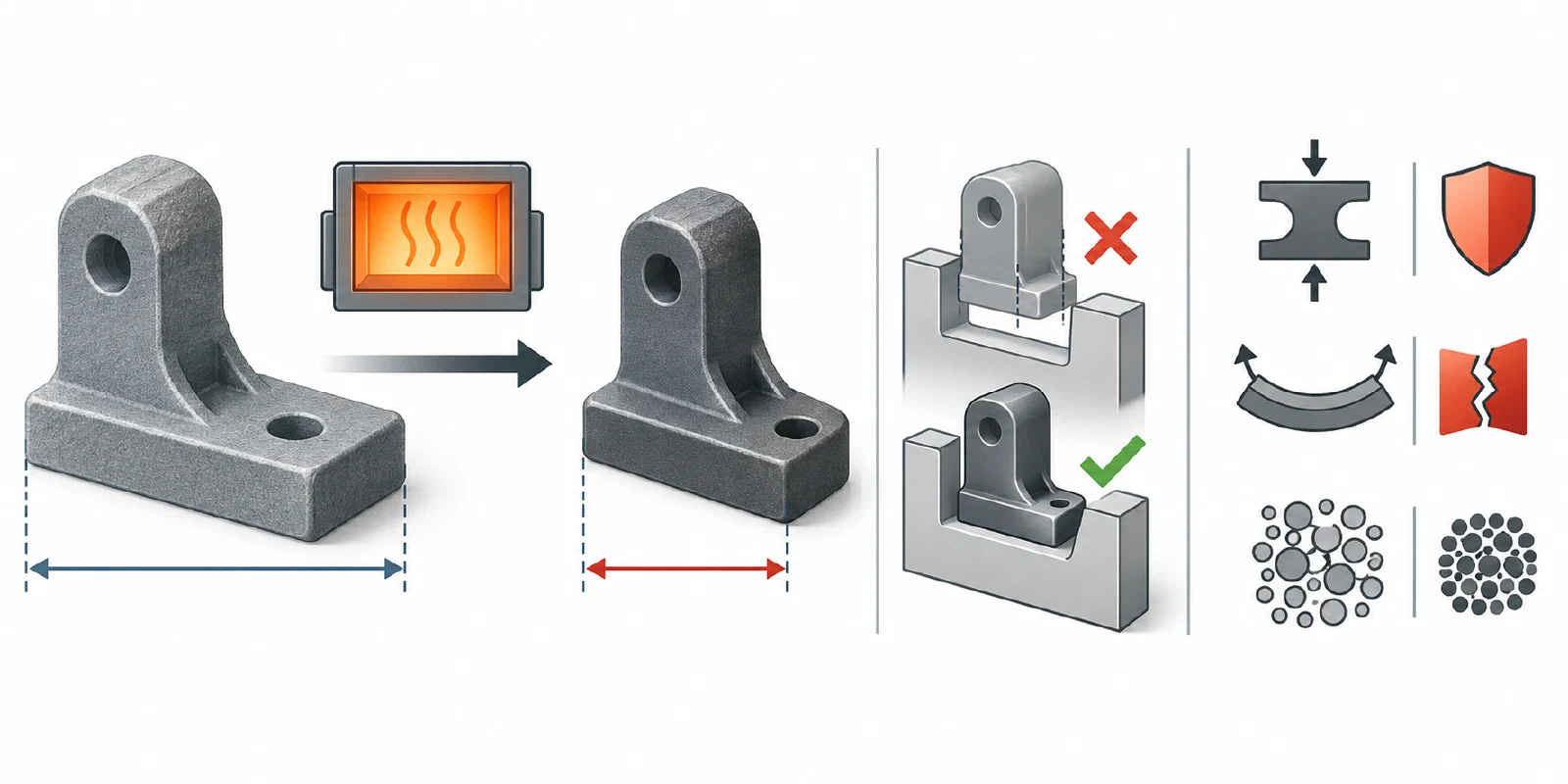
Examples show why a universal schedule fails
The Polymaker annealing guide describes different guidance by product family. Product documents are the relevant starting point for that manufacturer’s own material, but they still do not qualify an arbitrary shape or oven setup.
For Fiberon PET-CF17, the Polymaker Wiki page contains conflicting statements: one section says annealing improves layer adhesion, while its FAQ says it does not. The separate product page also gives different suggestions for dimensional stability and deformation. Do not combine these into one settled outcome. The manufacturer has not provided a comparative result here that resolves the conflict.
A different product’s data sheet may report a schedule but little outcome data. The PolyMax PC-FR V3.1 sheet gives a product-specific treatment recommendation without a reported dimensional or mechanical before-and-after comparison. That is a manufacturer recommendation, not evidence that a specific part will retain a desired fit or property.
The HT-PLA-GF data sheet reports before-and-after specimen results under its stated conditions. Its HDT values increase under the listed methods, while reported tensile strength changes little in XY and decreases in Z. Even inside one product sheet, the direction of change depends on which measurement and orientation you inspect.
The product sheet reports an annealing recommendation of 80–100 °C for 20–30 minutes, with 100 °C for 30 minutes as its recommendation. Under the sheet’s specimen conditions, HDT at 0.45 MPa changes from 75.5 to 114.7 °C; at 1.8 MPa, it changes from 59.7 to 84 °C. Reported tensile strength changes from 50.09 to 50.2 MPa in XY and from 23.68 to 22.46 MPa in Z. Those are product-sheet results, not a direction for other PLA blends or a prediction for a part. Check the exact current product document and equipment suitability.
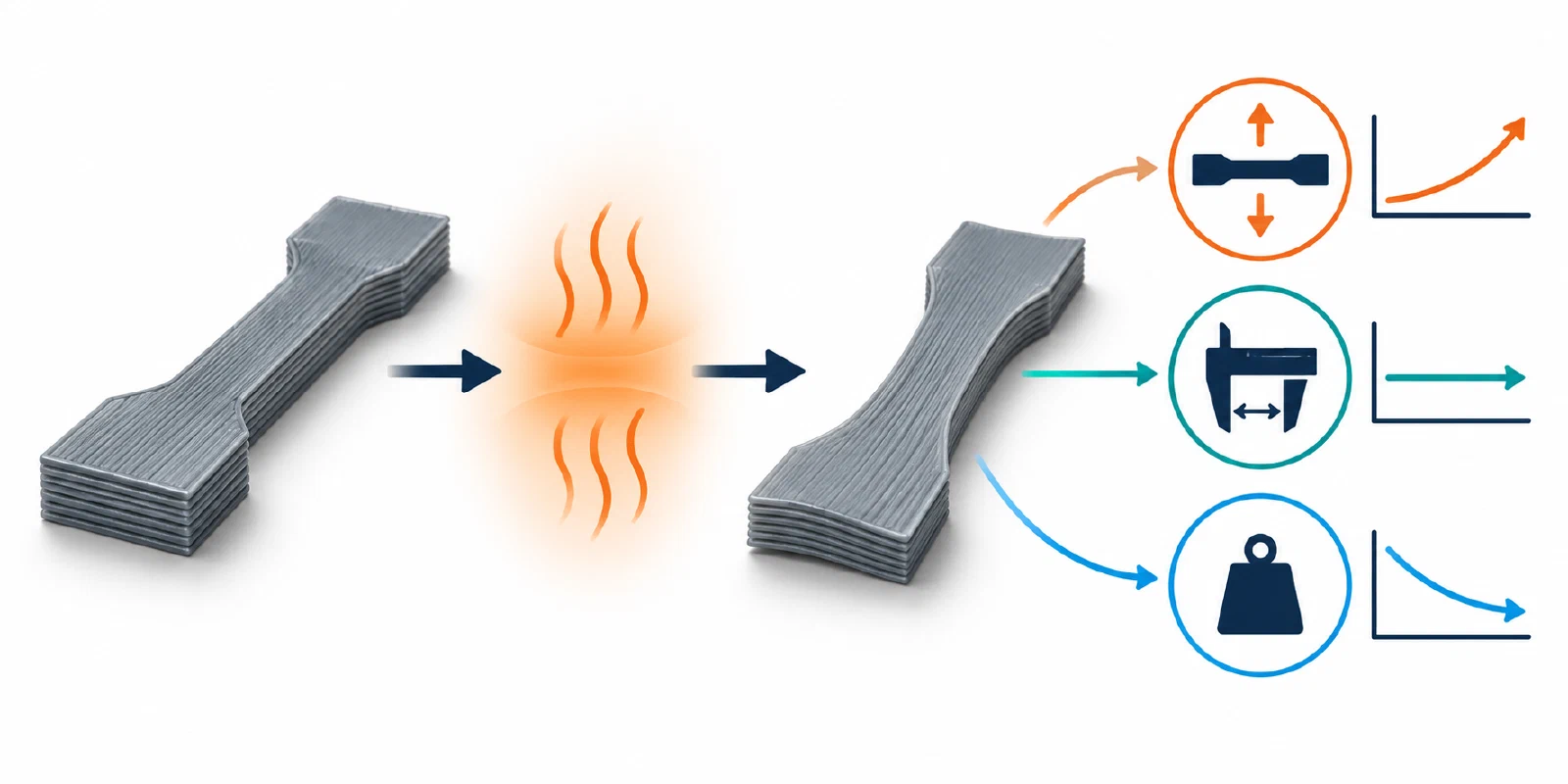
The PolyMax PC-FR data sheet gives 90 °C for two hours but does not report a dimensional or mechanical before-and-after result. That difference matters: a stated treatment recommendation does not show which property changed or whether an arbitrary part retained its fit.
One laboratory study of a single Bambu PET-CF spool also found that higher reported Vicat penetration onsets came with increasing dimensional shrinkage, especially along build Z. At its first annealed condition, 0.1 mm-penetration onset was 137.9 ± 4.7 °C compared with 80.4 ± 1.3 °C untreated; the study reports mean maximum Z shrinkage up to 0.71% across its temperature conditions. Its specimens were small, fully infilled test pieces and the treatment was conducted under a laboratory protocol. The measured temperature is not a continuous-use limit, and neither the shrinkage nor treatment can be transferred as a correction or schedule for another PET-CF part. See the study .
Watch for conflicts and missing controls
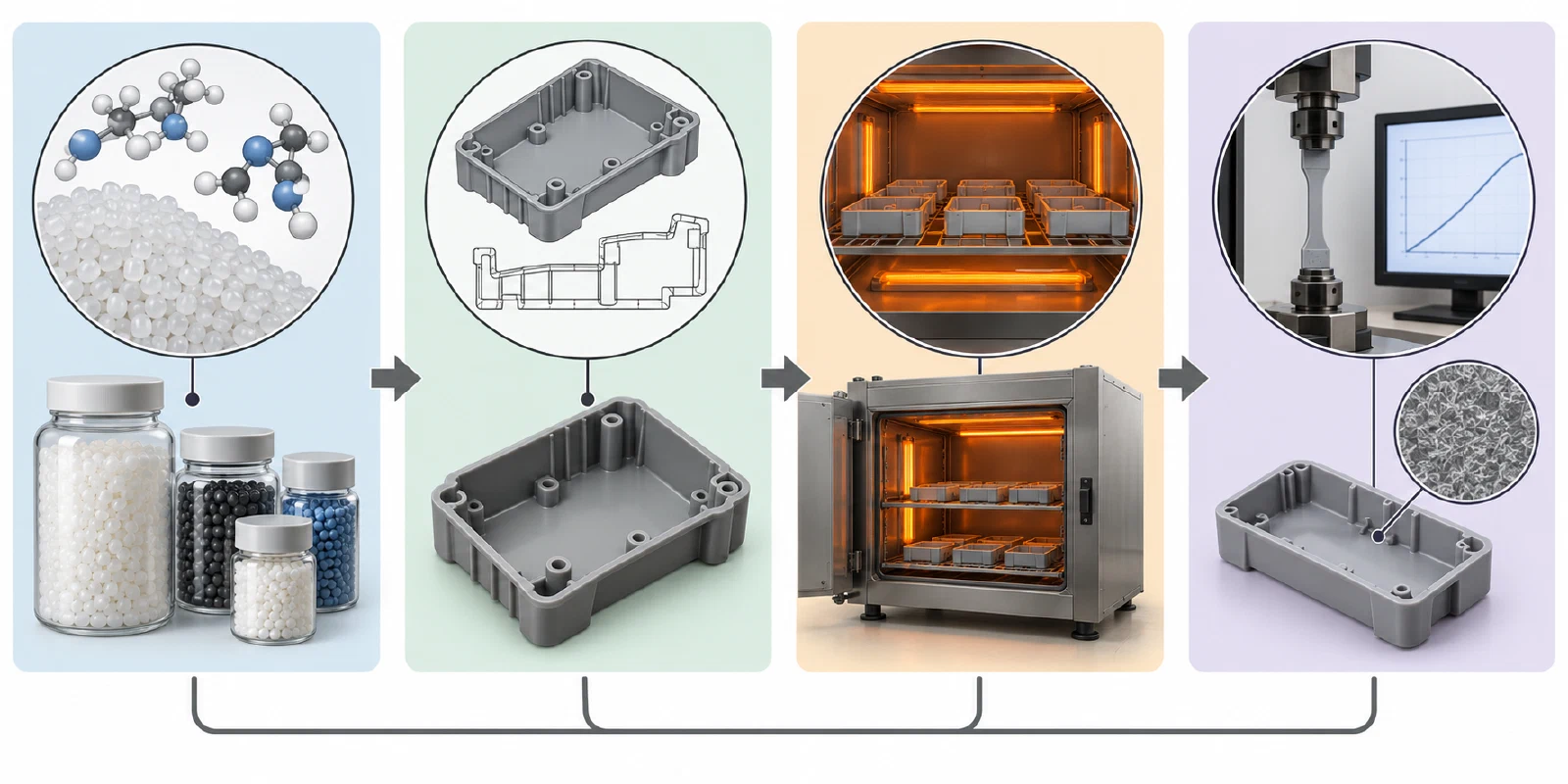
Manufacturer directions and study methods may disagree or leave important parts unspecified: treatment temperature uniformity, part support, geometry, time measurement, cooling, and the result actually tested. Even two published times for the same product can refer to different goals or configurations. Preserve both statements when a source does not resolve them.
Do not infer that a higher HDT establishes higher impact strength, better layer bonding, or more reliable dimensions. Use How to Read FFF Part-Performance Data to keep measurements and transfer limits separate.
A research abstract describes one shape-retaining ABS approach that printed a conformal PVA support shell, annealed the assembly above the reported glass-transition temperature, then dissolved the shell. It reports specimen and demonstration-part outcomes, but full methods, exact material identifiers, dimensional results, and broader controls remain unavailable. This is a research workflow, not a consumer schedule or transferable strength multiplier. Read the study abstract .
Use product documents as boundaries, not guarantees
If you are considering a treatment for a decorative, non-critical part, check the exact current material document and whether the appliance and setup are intended for that use. Account for dimensional fit before and after, not just an appealing property figure. A product-specific datasheet does not establish a general process, oven safety, load capacity, or use temperature for your finished object.
The evidence reviewed here does not establish a universal annealing schedule or a reliable dimensional compensation factor. Structural, life-safety, medical, regulated, or other high-consequence parts need applicable qualification beyond these examples.
Back to top ↑