“Will this part last outside?” combines several questions. Water contact, sunlight, temperature, humidity, repeated heating and cooling, and mechanical load can act together. A test that isolates one exposure or measures one property cannot answer every part of that question.
Name the exposure and the endpoint
Water immersion can change mass, dimensions, appearance, or measured strength. Those are separate endpoints. Sunlight and accelerated weathering studies use different lamp spectra, heat, moisture, and cycle durations. Heat questions need a defined measurement and load, not just a temperature. See How to Read FFF Part-Performance Data for why HDT and Vicat results are not service-temperature guarantees.
| Evidence example | What was measured | Boundary to keep |
|---|---|---|
| Printed PLA/PETG in water and salt or sugar solutions | Mass, dimensions, and visible or microscopic changes over weeks | The study did not establish water-tightness or retained mechanical performance |
| Selected PLA and PETG in an accelerated UV-B/condensation chamber | Tensile, compression, stiffness, and creep outcomes after a stated chamber cycle | Chamber time is not equivalent to a number of days outdoors |
| PLA, PETG, and ASA in a combined UVA, heat, and condensation cycle | Tensile and dynamic mechanical responses under one combined protocol | Different material responses do not create a general ranking or lifetime prediction |
| PLA exposed to local natural weather at one site | Selected tensile outcomes by infill pattern | Local climate and part setup do not transfer to another location or design |
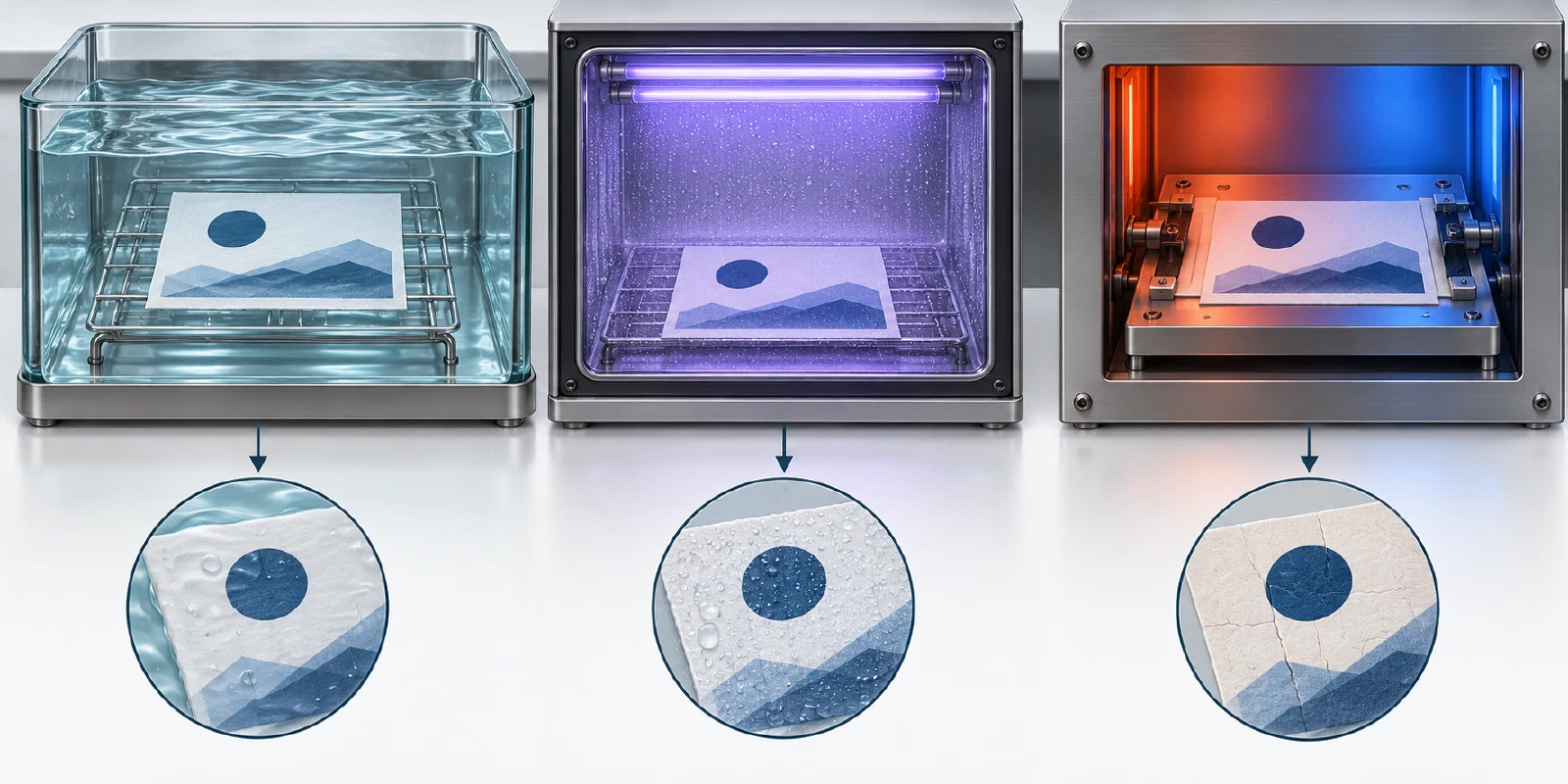
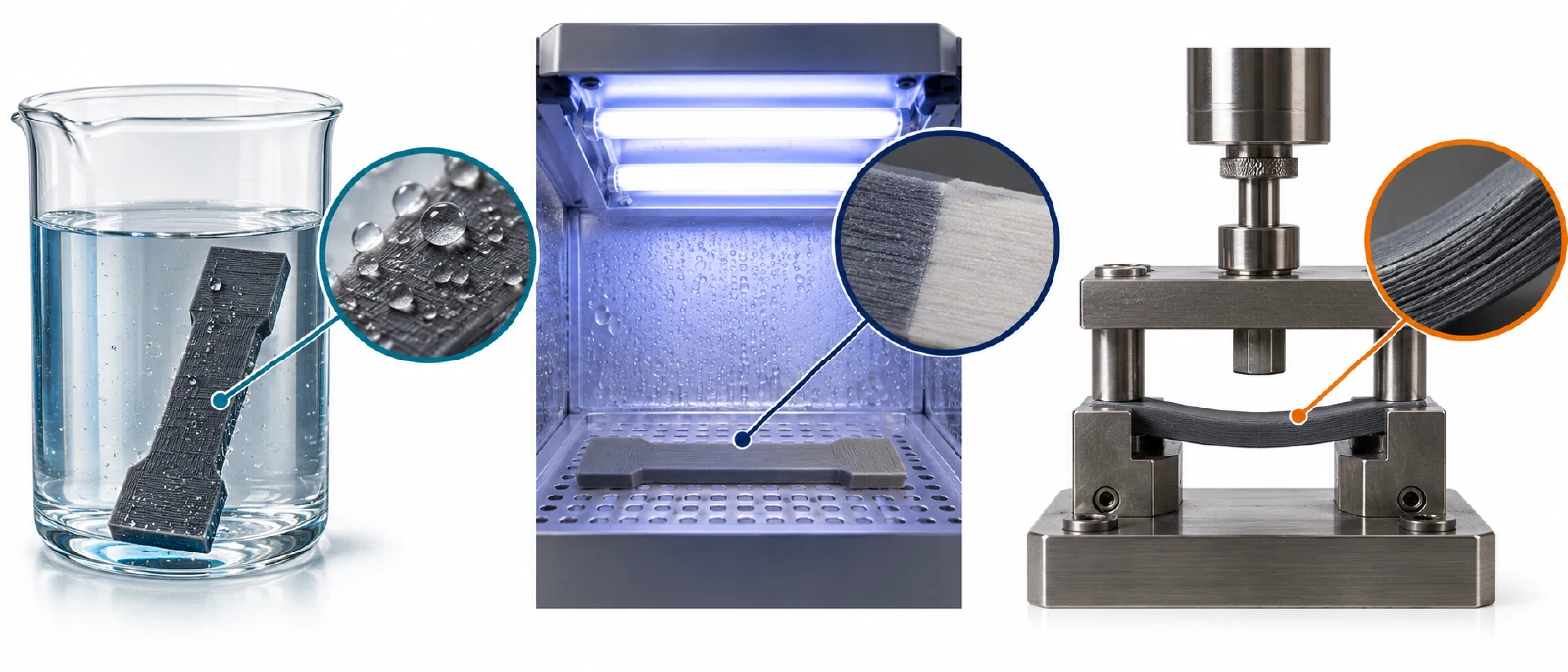
For example, a printed-specimen water study found differences in mass and observed degradation for its selected recycled PETG and sugarcane-based PLA. It explicitly did not establish mechanical retention or waterproofness. Review its material and test limits .
A separate chamber study used selected PLA and PETG specimens under UV-B and condensation. Its reported tensile changes differed between those two material products, but the chamber cycle is not ordinary sunlight and is not a sunlight-to-lifetime conversion. It cannot be used as a cross-material ranking for other filament products. Read the UV-B study .
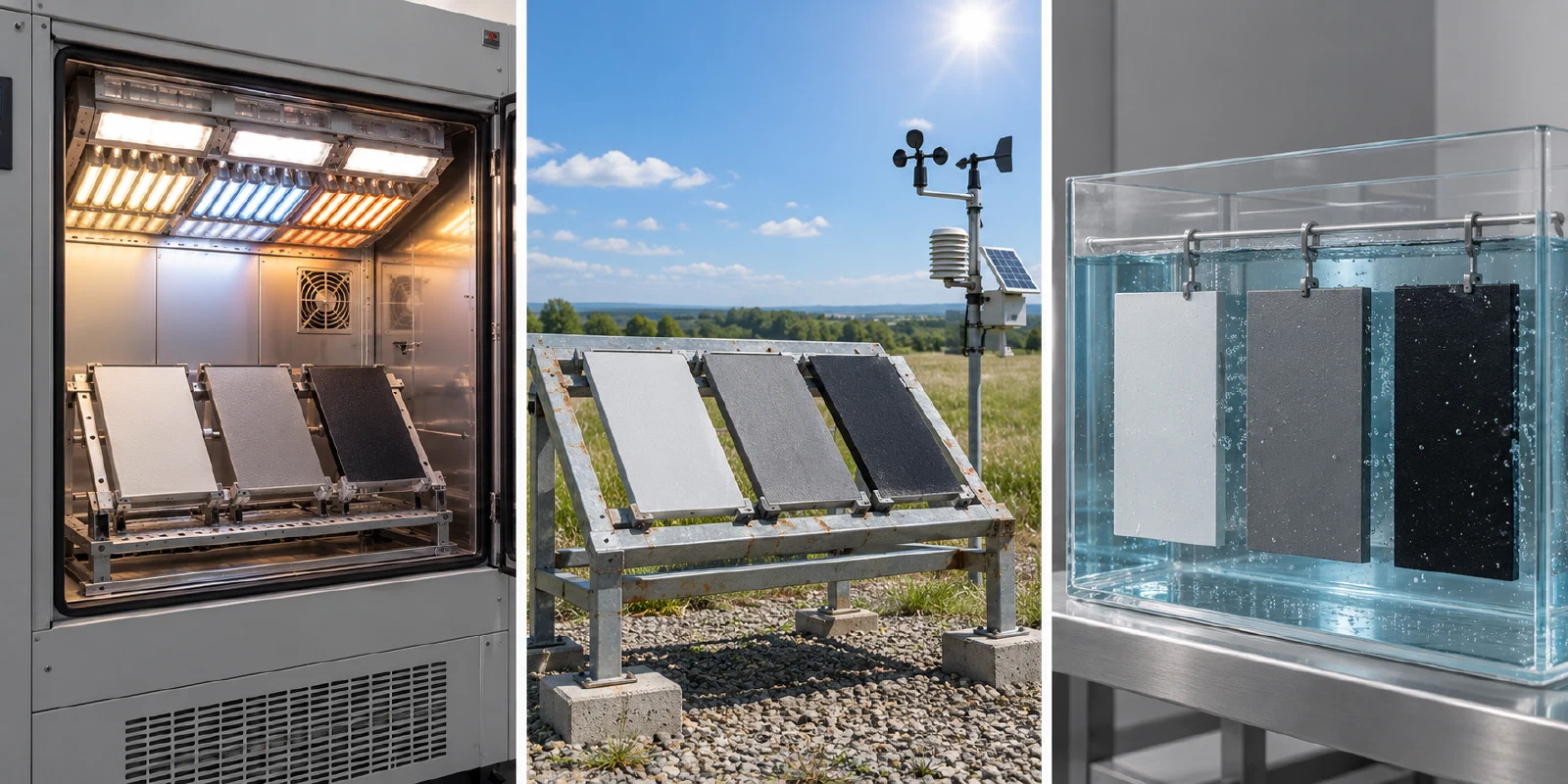
A 2026 combined-aging study tested Prusament PLA, PETG, and ASA using UVA-351, heat, and condensation. It reported different tensile responses after its 84-hour protocol. Its combined exposure and materials differ from the UV-B study above; the two results do not collapse into one universal outdoor ranking. See the 2026 study .
A natural-weather study likewise tested selected PLA specimens at one site and reported results by infill pattern. Local weather, print settings, and a limited exposure period do not support a climate-independent outdoor lifetime. See the field study .
Do not turn exposure hours into service life
Accelerated chambers can help compare samples under the named cycle. A local outdoor study can show how its own specimens changed at its site. Neither gives a reliable conversion to years of use unless a validated conversion model and matching conditions are supplied. Product geometry, orientation, color, infill, surface finish, loading, and the balance of rain, sun, and temperature all matter.
Also keep mechanical endpoints distinct. Appearance, mass gain, tensile strength, creep, and flexural response do not substitute for one another. A short static test does not resolve long-term deformation under load. In one PLA creep study, a specimen under 10 N continued deforming through a 170-hour test; the result is not an allowable load or an estimate for a finished part. See the study . A hydrophobic surface measurement does not establish water-tightness or durable protection.
Build a useful comparison
Before drawing a conclusion, record the exact filament product, printer and process, specimen or part geometry, orientation, exposure source and cycle, temperature and humidity, comparator, measured property, and elapsed time. For a non-critical decorative project, use those details to decide whether an additional low-consequence check is useful; do not treat it as certification.
Heat treatment is a separate intervention that can change both properties and dimensions; see Annealing FFF Parts Is Material-Specific . Moisture effects in nylon also need their own material and state comparison; see Moisture Conditioning of Printed Nylon Parts .
The sources reviewed here do not establish an outdoor lifetime, water-contact approval, universal heat limit, or service-life estimate for a finished part. High-consequence, structural, food-contact, life-safety, or regulated applications require appropriate independent qualification.
Back to top ↑