Surface finishing can hide layer lines and make a decorative part look more intentional. A smoother-looking surface is not automatically a stronger part, a more durable coating, or a finish that will work with every filament. Choose a finish for its appearance goal, then check the exact substrate and product instructions before treating it as a compatibility match.
Decide what “finished” means
Start with the result you want: less visible layer texture, a filled seam, an even color, a gloss level, or a surface that can be handled without obvious scuffing. These goals can pull in different directions. A filler can hide texture but round an edge; sanding can reduce peaks but change dimensions; a glossy topcoat may emphasize defects rather than conceal them.
Think of surface preparation, filling, primer, and paint as different jobs. Abrasion changes the surface profile; filler addresses low spots or seams; a primer or paint provides the finish specified by that product. Each added layer can change edge definition, fit, and appearance, so keep holes, snap features, and mating faces in mind. The current product instructions should identify whether a substrate or primer is supported; a generic label does not fill in missing compatibility data.
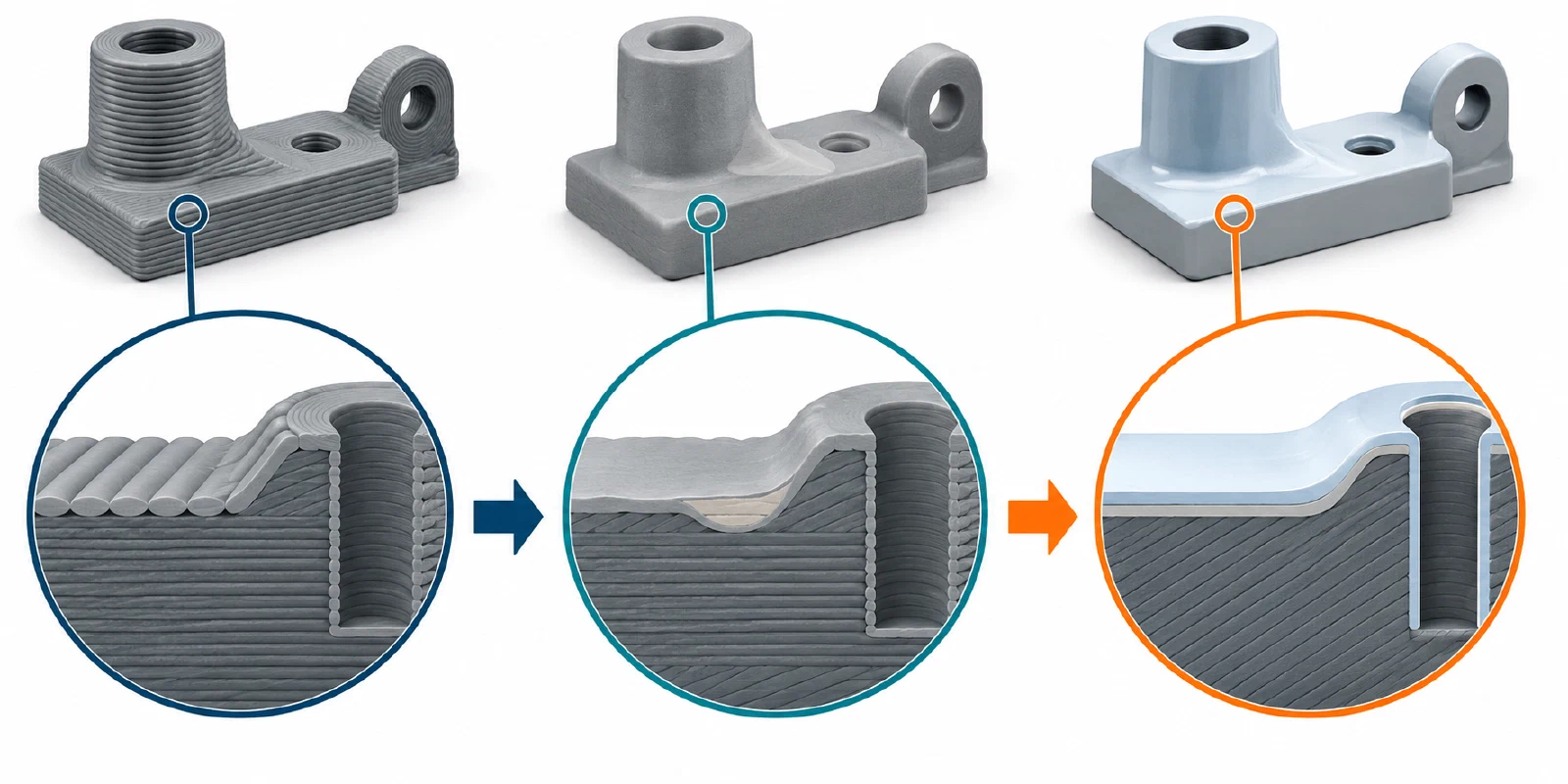
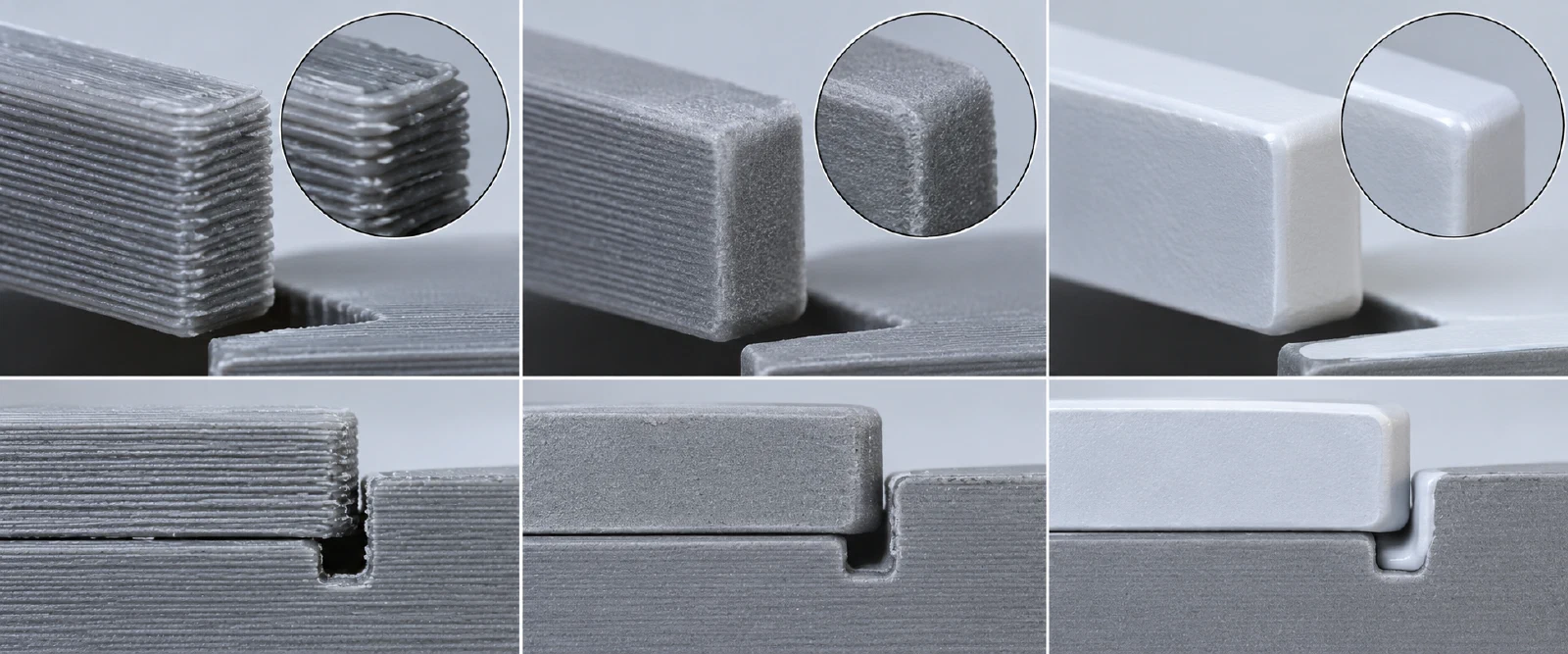
Use a small, non-critical test piece made from the same filament and with a similar surface. Include the same print orientation and surface condition where practical. Check appearance after the finish has dried or cured according to its current label, then check whether edges, holes, and mating surfaces still fit. A decorative test does not establish long-term coating durability.
Keep the steps and claims distinct
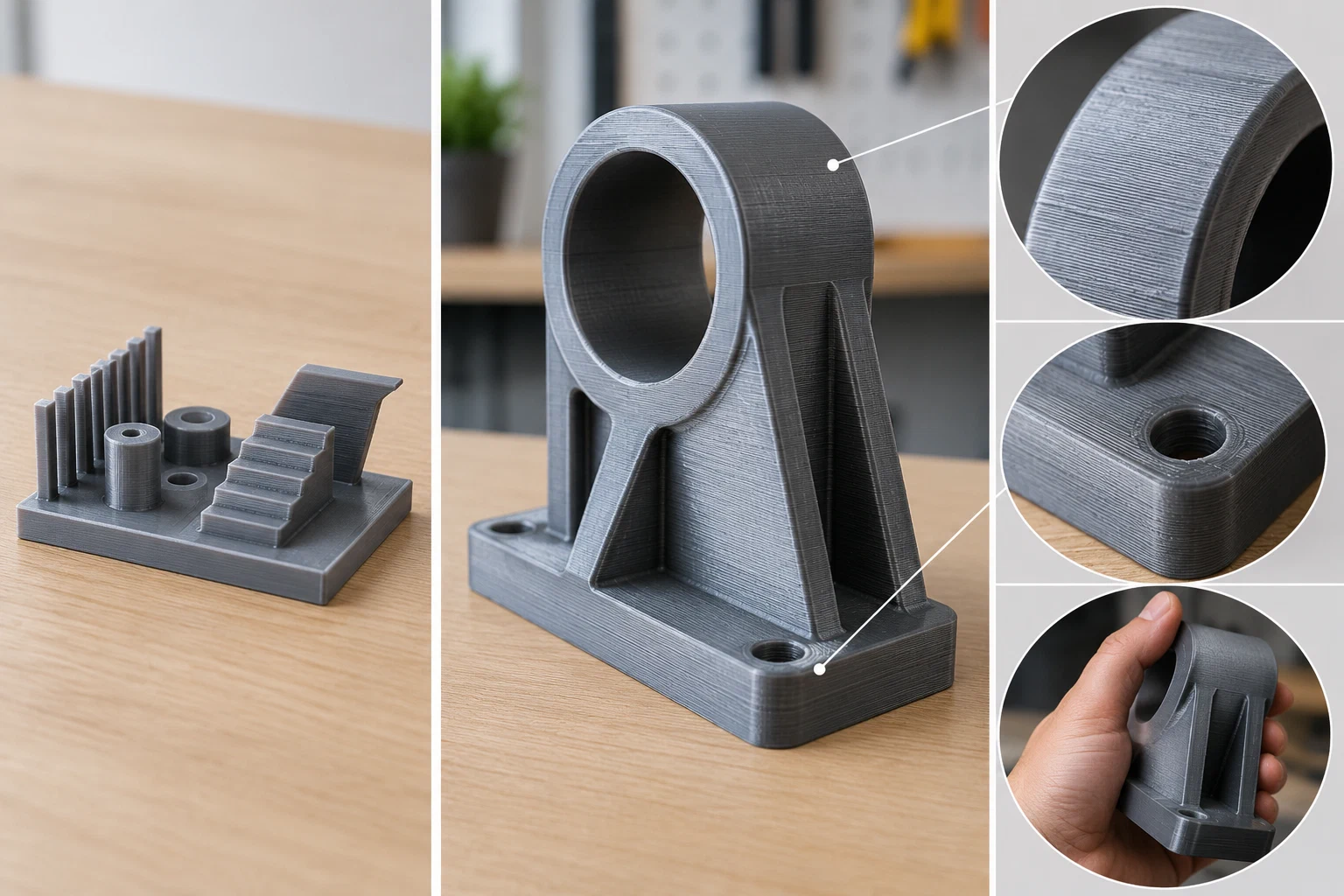
A 2018 Prusa post-processing demonstration is a useful visual example of a cosmetic workflow. It demonstrates approaches on selected prints; it is not a controlled compatibility chart for modern filament and coating combinations.
The material manufacturer’s PolyMax PLA information sheet says wet sanding can produce a smoother surface. It does not specify a grit range, material-removal limit, or measured adhesion result. Treat that as a narrow product statement, not a universal instruction for all PLA or all finishes.
An experimental study of selected printed ABS and PLA substrates found that sanding reduced measured roughness, while coating adhesion depended on the particular substrate/coating pair. On the study’s PLA specimens, pull-off results were about 2.2 MPa for the selected waterborne acrylic, 1.5 MPa for the alkyd, and 2.2 MPa for the experimental ABS/acetone coating. These are results for that study’s specimens and exact coatings—not values for a current consumer paint or a recipe to reproduce. In the same study, sanding did not consistently raise pull-off adhesion. Read the study and its limits .
That distinction matters: removing surface peaks and measuring how a coating separates are different observations. One does not predict the other.
Machining is a separate finishing route
Some research measures post-print milling as a way to change surface roughness and dimensions. One study reports outcomes for a named PLA, coupon, CNC machine, and tooling setup; another accessible abstract reports directional surface and tolerance changes for its own hybrid FFF-and-milling specimens. These results describe research configurations, not desktop procedures or general tolerances. Milling also raises separate questions about workholding, chips, tool guarding, and machine suitability that the studies do not resolve. Read the PLA finish-milling study and the hybrid surface and tolerance abstract .
Check the exact coating, primer, and substrate
“For plastic” on a label is not proof of compatibility with every FFF formulation. Find the exact product’s current technical instructions and safety information. Check whether the document names the polymer you printed, any required primer, surface preparation, cure conditions, and limitations. If the target polymer is not named, do not treat a generic plastic claim as a test result for your part.
For example, Rust-Oleum’s Plastic Primer technical data describes the manufacturer’s product instructions and its listed plastic substrates. It does not provide a printed-part adhesion study across common FFF materials. Use the product’s current label and safety data for any actual task; this article does not prescribe solvent, coating, or ventilation procedures.
A practical decision record
Before finishing a decorative part, note:
- the filament product and surface being coated;
- the finish goal and surfaces that must keep their dimensions;
- the exact primer, filler, or coating product and the substrate it names;
- the current label directions and required safety information;
- what your small test showed for appearance, fit, and handling.
If there is no product-specific support, treat the combination as unknown. A cosmetic test can help you decide whether the finish looks acceptable; it cannot establish chemical resistance, structural bonding, outdoor life, or safe use around food, heat, or skin.
Back to top ↑