A printed TPU textile-like structure is different from TPU attached to conventional fabric. The printed structure itself carries the load, bends, and responds to any dyeing or care treatment.
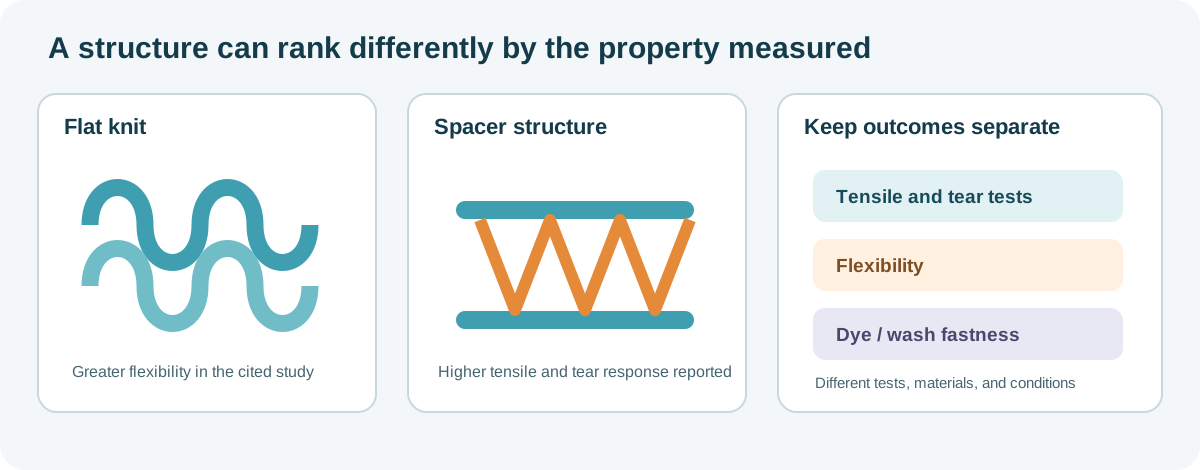
One 2025 study compared TPU structures made by material extrusion (MEX) and conveyor material extrusion (CMEX). It included spacer fabric and flat knit forms and measured tensile and tear behavior, flexibility, and dyeing-related color fastness. In the reported comparison, spacer structures had higher tensile and tear response, while flat knit structures were more flexible. Dye fastness varied by dye type and structure. These are results from the study’s materials, geometries, and methods, not a general TPU ranking. Read the study .
Do not combine those endpoints into a single “fabric strength” score. Tensile and tear tests load a structure differently; flexibility describes another response; dye or wash fastness describes color change under stated conditions. The study’s laboratory dyeing and care tests do not establish a home-care routine or ordinary garment life.
The article reports early research into digitally made textile structures, including a continuous-printing route. It does not qualify an item for wear, comfort, skin contact, safety, or repeated laundering. A consumer decision would need evidence for the exact structure, material, finish, and intended use.
Back to top ↑