Printing polymer onto fabric creates an interface between two different structures. A result from that interface does not transfer automatically to a polymer-to-polymer co-print, a different textile, or a garment in use.
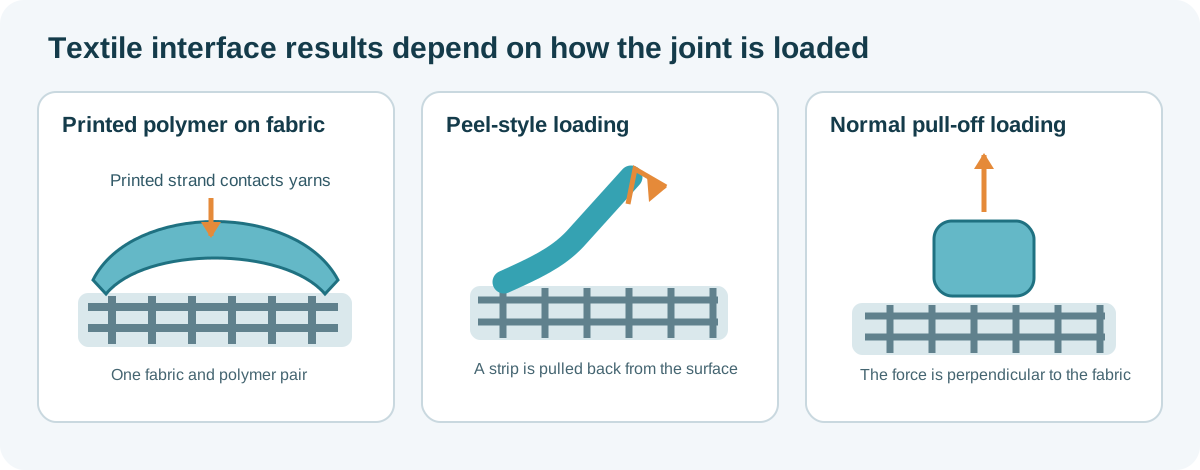
Keep the substrate and test method attached
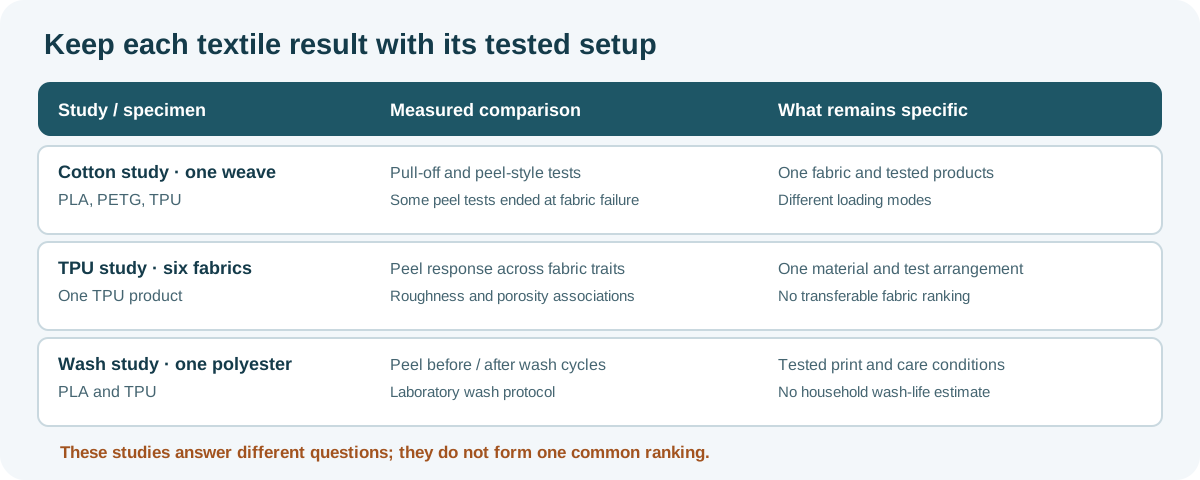
One study printed PLA, PETG, and TPU onto a single plain-woven cotton fabric. It compared perpendicular pull-off with a T-peel-style test. Pull-off produced a complete set of results for all three polymers; the peel test often ended early because the textile failed first. Those methods impose different stresses, so their values are not directly comparable. The study does not establish wash life or garment suitability. Read the study .
A separate TPU study compared six fabrics. Greater roughness and porosity were associated with higher peel response in that test matrix, but the source does not isolate those fabric features as independent causes or provide a transferable fabric ranking. Its results remain tied to one TPU product, printer setup, and test arrangement. Read the study .
Washing is another measured condition
A PLA and TPU study printed onto one polyester fabric and compared peel force before and after laboratory wash cycles. The reported changes differed between the two polymers under that study’s protocol. They do not predict household laundering, wear, or the life of a finished garment; the result remains tied to the tested fabric, print, and wash conditions. See the publisher article .
When comparing an interface result, note the fabric fiber, weave or knit, finish, filament product, printed pattern, test direction, and any washing or conditioning. A peel result, a normal pull-off result, and a post-wash result answer different questions.
The current studies provide examples for interpreting specific specimens, not an attachment recipe or acceptance threshold. They do not establish safe apparel use, skin-contact suitability, garment durability, or performance across other fabrics and printers.
Back to top ↑